
Forestry Grapple with Heel
Professional attachment for efficient timber handling!
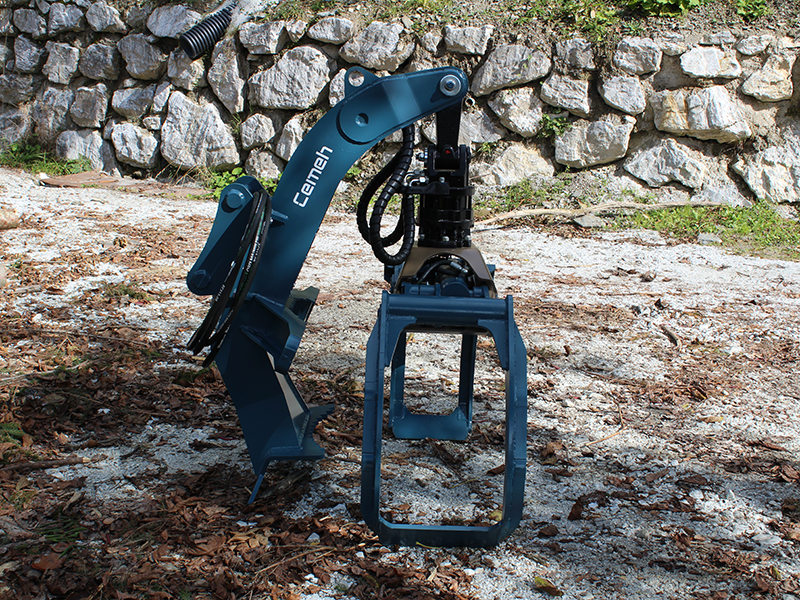
Forestry grapple with heel for excavator is a professional attachment for efficient handling of timber, logs, branches and other forestry material. It is designed for demanding forestry work, timber extraction, clearing of cutting areas and work on difficult-to-access terrain. Robust construction and well-thought-out technical solutions ensure high productivity, reliability and a long service life.
- Purpose-built version for excavators
- Highly durable steel construction
- Protected hydraulic hose routing
- Long service life and low maintenance costs
Forestry grapple with heel – for excavator
The forestry grapple is designed for demanding forestry tasks, timber extraction, clearing of cutting areas and work on difficult-to-access terrain.
The grapple structure is made of highly durable steel, and the jaws are additionally reinforced on both the inside and outside. This design enables safe pulling and moving of logs without deformation or bending, even under heavier loads. Thanks to its strong grip, the grapple is suitable for professional use in forestry, municipal work and biomass preparation.
A special feature of the grapple is the integrated heel for excavators, which enables the operator to work more efficiently and manoeuvre the machine more easily. When turning the excavator, the heel can rest on the ground, improving stability and allowing a more controlled rotation. It also provides safe support for timber during handling and allows the grapple jaws to be clamped against the heel during transport, preventing free swinging and increasing safety when moving.
The hydraulic hoses are routed protectively inside the heel structure, reducing the possibility of mechanical damage during work in the forest and extending the service life of the hydraulic system. The grapple can be adapted to different types and sizes of excavators, making it an optimal solution for professional users who need reliable forestry equipment.
Key advantages of the forestry grapple with heel
- Purpose-built version for excavators
- Highly durable steel construction
- Additionally reinforced jaws for greater resistance to deformation
- Efficient handling of timber and forestry material
- Integrated heel for better stability and easier excavator manoeuvring
- Option to clamp the jaws against the heel during transport
- Protected hydraulic hose routing
- Adaptation to different types of excavators
- Long service life and low maintenance costs
Technical features
- Material: highly durable steel
- Reinforced jaws (internal and external reinforcement)
- Grapple width: 1.2–2.2 m
- Integrated multifunctional heel
- Protected hydraulic hoses
- Version according to customer requirements
- Adaptation available for different excavators
Why choose the CEMEH forestry grapple with heel?
In forestry work, every minute counts. That is why it is important for the attachment to be designed to enable the operator to work faster, more safely and more efficiently. The forestry grapple with heel combines gripping and support functionality in one attachment, significantly increasing the usefulness of the excavator in timber extraction and handling.
The heel provides better control over timber during moving, stacking and preparation for transport. At the same time, it provides additional support when working on more demanding terrain, where stability and precision are essential.
Thanks to its robust construction, the grapple is suitable for everyday professional use in the forest. The well-thought-out design ensures reliable operation even in the toughest working conditions, while protected components reduce the risk of damage and unnecessary downtime.
Because every excavator is different, the grapple can be adapted to the individual machine and the user’s needs. This gives you a solution optimally matched to your working method and field requirements.
Whether for timber extraction, clearing forest areas or handling timber, the forestry grapple with heel is a reliable choice for everyone who expects the most from their equipment.